 Every strong safety culture is more than a rulebook or a checklist — it’s about people on the ground who know the work, understand the risks, and have earned the trust of the crews they support. In this installment of How It’s Done, we highlight three union safety leaders who bring deep field experience, practical judgment, and worker-first credibility to the job every day — roles that grew out of ongoing UWUA efforts to strengthen field safety support and representation.
Leroy Huckleberry, a Local 223 member at DTE Energy; Jason Ayala, a Local 1-2 member at Con Edison; and Joe Daniels, a Local 483 member at SoCal Gas, each followed a different path into safety leadership, but they share a common foundation: years in the craft, active union involvement, and a commitment to making safety a collaborative, non-punitive resource for members. Their roles sit at the intersection of labor and management, where communication, coaching, and problem-solving matter as much as technical knowledge.
Across gas transmission, distribution, and electric operations, they show what effective safety programs look like in practice — field presence, early hazard recognition, trend tracking, peer engagement, and two-way information flow between job site and leadership. Together, their stories demonstrate how union-driven safety programs don’t just respond to risk — they get out ahead of it, building trust and delivering real protection for workers.
Jason Ayala
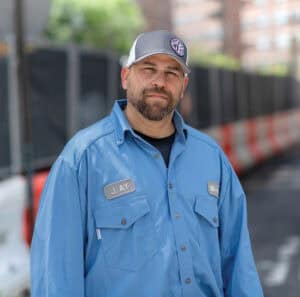 Senior Safety Inspector, Electric Division, Local 1-2
Con Edison
I started at Con Edison in 2004 at age 28, coming in off the street as a general utility worker with no prior electrical or utility background. My father worked for the company and served as a shop steward, and for years he encouraged me to apply. Like a lot of young people, I figured I’d find my own way first. I bartended, drove trucks, and did demolition and moving work — none of these jobs were a career. Eventually I realized I wanted stability, a pension, and a future. I took the test with Con Edison, got hired, and never looked back.
My first assignment was in the electric division, where I had to adapt quickly to tough conditions — working outdoors in all weather, navigating heavy traffic, dealing with the public, and managing serious electrical hazards. The learning curve was steep, but I focused on mastering the craft. After about two years, I earned my lead title as a distribution splicer. That role carried more responsibility — not just for the job, but for the truck, the tools, and my partner’s safety.
Not long after that, Local 1-2 approached me about becoming a shop steward because I was already vocal in advocating for my coworkers. I accepted and have now served as a steward for more than 18 years. That work pulled me deeper into safety, and I joined the safety committee, where I spent more than 15 years as both a facilitator and trainer. When prior safety leadership retired, the union asked me to step into a full-time safety role, which I’ve held for the past three years.
Our electric division has five senior safety inspectors across regions, each assigned to a geographic area. I cover Manhattan. The role reports both to union leadership and to a Con Edison manager, which creates a useful balance. From the start, it was agreed the position would not be punitive — our credibility depends on that. If members see us as discipline agents, they won’t trust us. My job is to support, coach, and correct hazards — not write people up.
My schedule is generally Monday through Friday, starting early — usually around 6:00 a.m. — but it’s flexible and driven by operational needs. I’m also on call for emergencies. Most days begin by reviewing schedules and planned safety meetings across multiple departments and satellite locations in Manhattan. I often attend tailboard and morning safety meetings, present topics alongside management, and answer crew questions.
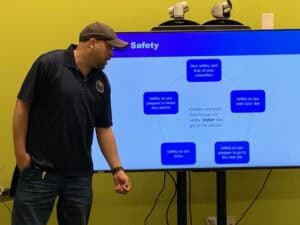 Much of the rest of my day is spent in the field. Using vehicle location systems, I can see where crews are working and visit job sites without advance notice. It’s not about catching mistakes — it’s about seeing real conditions in real time. A fresh set of eyes can spot a hazard or suggest a better approach. If I see an immediate danger, I stop the job and address it right away. If it’s a work-practice issue, we talk it through and use it as a coaching moment.
Field reception is usually positive. Some people are naturally resistant to feedback, but most understand I’m there to help them get home safe. When safety is approached as support rather than enforcement, the conversation changes.
Training is another major part of my role. I teach onboarding safety sessions for new hires several times a year, typically in groups of about a dozen. I also lead an eight-hour driving safety course for current employees twice a month. Driving is one of our biggest exposure risks, so setting expectations early and reinforcing them regularly is critical.
I was born and raised in New York City and have been with my wife — my childhood sweetheart — for more than 25 years. We have two teenagers, and I encourage both of them to consider union utility careers. This company and this union gave me opportunity, purpose, and a way to look out for others. Safety work lets me give that back every day by helping make sure our members have the knowledge, awareness, and backing they need to work smart and stay safe.
Leroy Huckleberry
 Safety Director, Gas Division, Local 223
DTE Energy
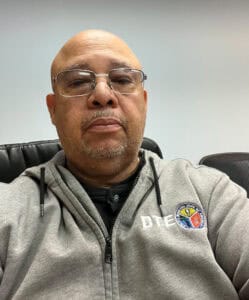
I’ve worked at DTE Energy for 33 years, and for most of that time, safety has been more than part of my job — it’s been my passion. I’ve been in my current role since 2012, after serving about 10 years as a safety captain at one of our locations. I worked my way up through the safety ranks, starting as a union steward and volunteering for safety responsibilities whenever I could.
Our local negotiated full-time safety positions more than two decades ago, and that foresight has made a real difference — dedicated union safety professionals change outcomes. I oversee safety for roughly 850 gas members and work alongside dozens of safety captains across our facilities, as well as two other full-time safety directors in the distribution/operations and power plant divisions. Safety director candidates go through a joint labor-management interview process, with the union president making the final selection and presenting it to the company for approval.
In day-to-day practice, the role is highly field-driven, and no two days are the same. My schedule runs Monday through Friday, from 7:30 a.m. to 4:00 p.m. Most mornings begin with safety calls or meetings with safety leads and other representatives, where we review incidents, weather conditions, job risks, and developing concerns. In Michigan, weather is a major factor — extreme cold, ice, fog, and heat all affect how work is performed. Sometimes that means recommending delayed starts, shifting to training days, or limiting work to emergency-only response.
Tracking trends is a key part of the job. In 2025, we saw a spike in slip, trip, and fall injuries during the winter, so I pushed to make anti-slip footwear and traction controls a top priority this season. Safety isn’t just about rules — it’s about spotting patterns and getting ahead of repeat hazards.
Field presence is central to the role. I regularly visit crews and job sites — sometimes scheduled, sometimes unannounced — as a union safety resource. I’m not there to play “gotcha” or discipline anyone. I listen first, ask about concerns and obstacles, and ask what workers would change to improve safety. I get better information by listening than by lecturing.
Our safety structure operates on four levels, from location-based safety committees up through systemwide labor-management safety councils, each with union and management leads. I attend upper-level meetings and also sit in on lower-level sessions to keep information moving both ways. Five unions represent DTE employees, and safety leads from each coordinate regularly to share information and align efforts. Communication gaps are one of the biggest safety risks.
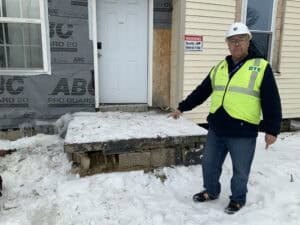
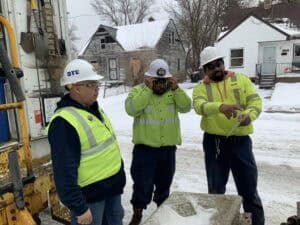
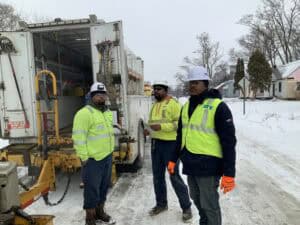
While designated trainers handle formal instruction, field observations often create opportunities for immediate improvement. When something can be done more safely, I offer practical, experience-based guidance. These visits focus on observation and improvement, not enforcement.
Beyond field engagement, I report regularly to our union executive board and general council, so leadership understands what members are facing on the job. When procedures change or new hazards appear, they hear it from us first — not through rumors or after an incident.
At the national level, I serve on the UWUA National Safety Committee, where we benchmark with other locals and share lessons learned, emerging risks, and best practices. Because we’re closely connected to field conditions across the country, we often spot hazard trends early and begin developing practical solutions well before formal company guidance is issued.
The most rewarding part of the role is helping resolve safety issues between labor and management. Everyone supports safety in principle, but real-world roadblocks still arise. Working through those challenges while keeping worker protection at the center of each solution is something I take pride in.
At the end of the day, safety works best when it’s built on trust, communication, and union involvement. When members know their safety voice is heard and backed by their union, the whole system is stronger.
Joe Daniels
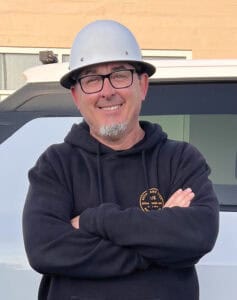 Transmission Safety Specialist, Local 483
SoCal Gas
I’ve been with SoCalGas for 27 years, going on 28, and almost all of that time has been spent in the field. I started in distribution, then moved into transmission, where I worked as a welder and crew leader for more than 14 years. That background shaped how I look at safety — practical, hands-on, and grounded in how the work actually gets done.
Today, I serve as a full-time safety specialist covering transmission pipeline operations. I’ve been in this role since mid-August, but safety has been part of my daily work for decades. You can’t work around high-pressure gas pipelines, heavy equipment, and complex digs without developing a deep respect for doing the job right and going home whole. The position requires professional credentials, and I hold a Certified Utility Safety Professional certification (CUSP), which focuses specifically on utility and energy-sector hazards and safety management practices.
This position exists because the union pushed for it. After several major industry incidents in California, there was a strong effort to strengthen field safety culture. What began in 2017 as a pilot safety advisor concept was eventually negotiated into a permanent, fully represented safety specialist role in our contract. That matters because it means safety support comes from someone who has done the work and understands the job from the workers’ side.
The program continues to grow. I have a counterpart in gas storage who supports Local 483 members on that side of our work. In our latest jointly negotiated contract, additional safety specialist roles were added across multiple bargaining units — including Locals 522 and 132 as well as UFCW Locals 995, 350, and 478 — covering both gas distribution and customer service. Those additions include two distribution safety specialist positions and two customer service safety specialist positions, expanding field safety support across classifications.
The position is posted and bid like other union jobs, with qualified employees applying, seniority considered, and candidates going through a joint company-union interview process to ensure fairness and build trust from the start. When the safety specialist role was posted, I applied because I enjoy troubleshooting and problem-solving and felt I could add value to the work our field employees do every day.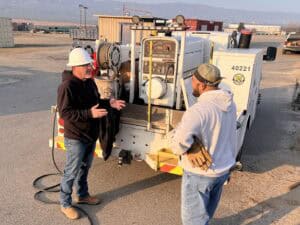
My typical schedule runs from about 6:30 a.m. to 3:00 p.m. Monday through Friday, but the day can change quickly. I start by checking messages, incident reports, and planned work. From there, I coordinate with crews, supervisors, and safety leads about higher-risk tasks and active projects. Much of my day is spent working independently in the field, so the role requires self-direction and constant communication.
A big part of my role is being present and accessible. On larger or more complex jobs, I’m often on-site supporting crews, joining tailboards, and talking through hazards, controls, and job planning. I’m there to coach and mentor — not enforce — and help teams think through risk before something goes wrong. That guidance extends not only to our members but to contractors working alongside them, because shared awareness and accountability keep everyone safer.
Local 483 members perform a wide range of transmission work, including pipeline and compressor station maintenance and repair, along with compliance activities such as pipeline patrols and valve maintenance. The work often involves large-diameter pipe, specialized welding, and major excavation projects that can run for days or weeks under changing ground and weather conditions. Because plans can evolve quickly, safety support has to stay flexible and responsive.
One example was the 2025 landslide in the Santa Clarita area that affected pipeline infrastructure. The response required constant reassessment and coordination as conditions changed. Situations like that show why experienced, field-based safety support matters. Procedures are important — but judgment and communication are just as critical.
I work closely with joint safety committees and SoCal Gas regional labor-management safety committees, where union and management representatives review concerns, trends, and lessons learned. The company’s safety culture is much stronger today than when I first started, with both union and management aligned on priorities and expectations. I serve as a field resource in both directions — bringing crew concerns forward and sharing lessons learned and safety updates back out so improvements reach the job site quickly.
Building trust is central to the role. Crews need to know you’re there to support them, not second-guess them. Because I came out of transmission welding and leadership roles, I understand production pressure, job complexity, and field realities. That shared experience helps open doors and start real conversations.
I often tell crews that safety works best peer-to-peer — when workers look out for each other, speak up early, and use stop-work authority when something isn’t right. We reinforce programs like near-miss reporting and good-catch recognition not to create paperwork, but to catch problems before they become injuries.
I’m based in Bakersfield, but the SoCal Gas transmission territory I cover stretches nearly to San Diego, so it’s a large and varied operating area. That makes accessibility, communication, and field presence especially important.
What I enjoy most is solving problems in real time. When a crew raises a concern and we work through it together to make the job safer, that’s a win. The goal is simple: make sure our members have the knowledge, backing, and confidence to work safely every day.